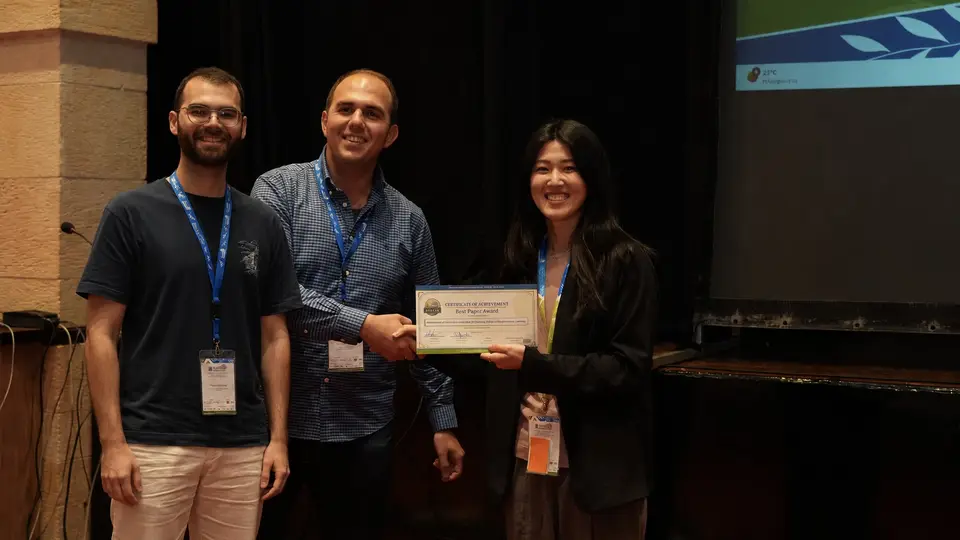
Best Paper
Adversarial Curriculum Generation for World Models in Reinforcement Learning
Siyao Li and Matteo Leonetti
Adaptive and Learning Agents Workshop
at AAMAS, Paphos, Cyprus

Adaptive and Learning Agents (ALA) brings together researchers working on learning, adaptation, and autonomous behaviour in single- and multi-agent systems. The workshop welcomes contributions from across computer science (including reinforcement learning, agent architectures, evolutionary computation, planning, and game theory) as well as from related fields such as cognitive science, biology, economics, and the social sciences.
ALA aims to foster collaboration, highlight recent advances, and provide a representative overview of current research on adaptive and learning agents. It serves as an inclusive forum for discussing both theoretical foundations and practical applications, spanning topics such as learning and adaptation in dynamic or open-ended environments, coordination and communication among multiple agents, incentive and mechanism design, and the emergence of collective behaviour in complex systems.
The workshop places particular emphasis on emerging learning paradigms and on methods that enable agents to operate reliably in large-scale, uncertain, or evolving environments. We encourage work that extends established techniques or introduces new frameworks to address the challenges of real-world adaptive and multi-agent systems.
Papers can be submitted through OpenReview.
We invite submission of original work, up to 8 pages in length (excluding references) in the ACM proceedings format (i.e., following the AAMAS formatting instructions ). This includes work that has been accepted only as a poster or extended abstract at AAMAS 2026, but not as an oral presentation. Additionally, we welcome submission of preliminary results, i.e. work-in-progress, as well as visionary outlook papers that lay out directions for future research in a specific area, both up to 6 pages in length, although shorter papers are very much welcome, and will not be judged differently. Finally, we also accept recently published journal papers in the form of a 2 page abstract.
Furthermore, for submissions that were rejected or accepted as extended abstracts at AAMAS, authors need to also append the received reviews and a pdfdiff.
All submissions will be peer-reviewed (double-blind). Accepted work will be allocated time for poster and possibly oral presentation during the workshop. In line with AAMAS, the workshop will be in person.
When preparing your submission for ALA 2026, please be sure to remove the AAMAS copyright block, citation information and running headers. Please replace the AAMAS copyright block in the main.tex file from the AAMAS template with the following:
    \setcopyright{none}
    \acmConference[ALA '26]%
    {Proc.\@ of the Adaptive and Learning Agents Workshop (ALA 2026)}%
    {May 25 -- 26, 2026}%
    {Paphos, Cyprus, https://alaworkshop2026.github.io/}%
    {Aydeniz, Delgrange, Mohammedalamen, Yang (eds.)}%
    \copyrightyear{2026}
    \acmYear{2026}
    \acmDOI{}
    \acmPrice{}
    \acmISBN{}
    \settopmatter{printacmref=false}
For the submission of the camera-ready paper make sure to submit the deanonymized version with the replaced copyright block above.
When submitting your paper, you will have the option to provide supplementary material (e.g., code, data, videos). In the case your submission contains an appendix, we encourage the authors to include it at the end of the main paper, after the references, so that reviewers can access it easily.
All times are presented in Paphos local time (EEST, UTC+3).
| 08:45-09:15 | Welcome & Opening Remarks |
| 09:15-10:15 | Session I Invited Talk: Reuth Mirsky |
| 10:15-11:00 | Coffee Break |
| 11:00-12:30 | Session II |
| 11:00-11:15 | Prabhat Nagarajan, Brett Daley, Martha White, Marlos C. Machado Accelerating Q-learning through Efficient Value-sharing across Actions |
| 11:15-11:30 | Ruilan Wang, Francisco Aristi Reina, Katerina Papadaki Virtual Double Oracle: Principled Reinitialisation for Incremental Nash Equilibrium Computation |
| 11:30-11:45 | Panos Aronis, Mehdi Dastani, Roxana Rădulescu, Giovanni Varricchione Leveraging Reward Machines for Efficient Multi-Objective Reinforcement Learning |
| 11:45-12:30 | Short Talks, 5 minutes each in order
|
| 12:30-14:00 | Lunch Break |
| 14:00-15:30 | Session III & Poster Session |
| 14:00-14:15 | Raghav Thakar, Kagan Tumer Cultivating Divergent Multi-Objective Expertise in Multiagent Systems via Expert Ensembles |
| 14:30-15:30 | Poster Session Papers presented in today's sessions, together with additional poster-only papers:
|
| 15:30-16:15 | Coffee Break |
| 16:15-17:45 | Session IV |
| 16:15-17:15 | Invited Talk: Frans Oliehoek |
| 17:15-17:45 | Short Talks, 5 minutes each in order
|
| 18:00 | Social Event |
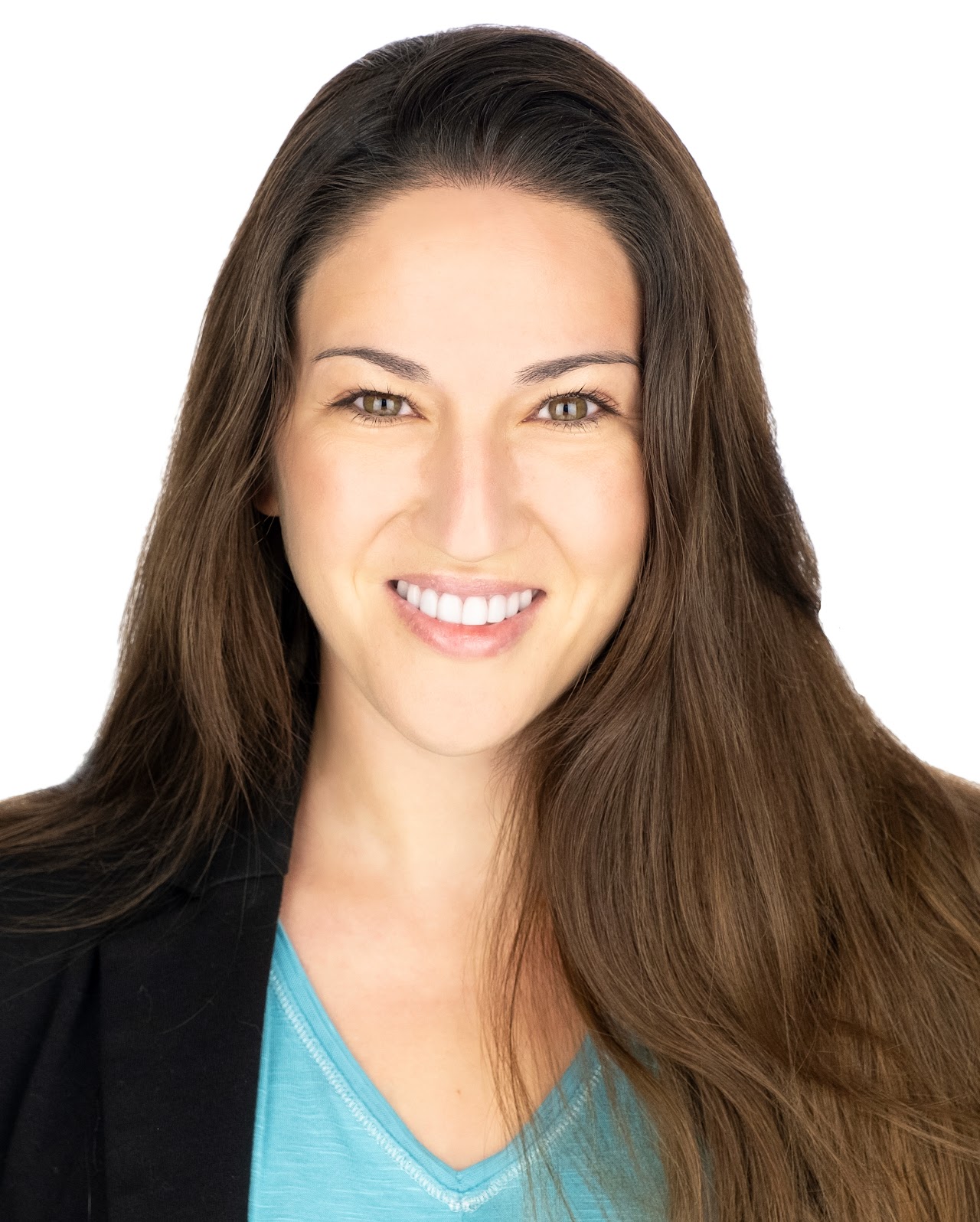
Title: Adaptive? Learning? Agents? Reclaiming Agency in Adaptive AI
Abstract: Adaptive learning agents are on the rise, at least by name. Yet the terms can sometimes stretch further than we intend: adaptive sometimes means incrementally re-optimized; learning is anything trained on data; and agent means any algorithm with an action interface. If we want the phrase to carry its full promise, we need to ask what kind of agency we are actually building toward.
In this talk, I will use this ambition as a starting point to argue that keeping sight of agency is essential for systems that operate robustly in complex, human-centered environments. Through examples of agents that interrupt, question, or intelligently disobey, I will discuss why agency requires more than policy improvement or task performance. It requires the ability to interpret goals, recognize when instructions conflict with broader objectives, and act with justified autonomy. These examples highlight both the promise of adaptive learning agents and the missing foundations we still need, including richer models of intent, oversight, and multi-agent planning.
Bio: Reuth Mirsky is an Assistant Professor at Tufts University and head of the Goal Optimization using Learning and Decision-making (GOLD) lab, with appointments in the Computer Science Department and Mechanical Engineering Department. Her research focuses on cooperative artificial agents, including rebellion and disobedience in AI, goal and plan recognition, learning and adaptation, and human-robot interaction. Before joining Tufts, she was a Senior Lecturer at Bar-Ilan University and a postdoctoral fellow at the University of Texas at Austin.
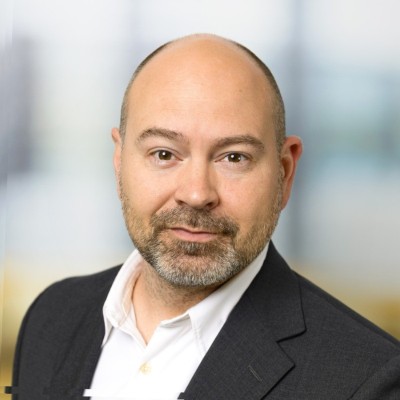
Title: Model-based reinforcement learning and abstraction: towards interactive learning and decision making
Abstract: In reinforcement learning (RL), we develop techniques to learn to control complex systems, and over the last decade we have seen impressive successes ranging from beating grand masters in the game of Go to real-world applications like chip design, power grid control, and drug design. However, nearly all applications of RL require access to an accurate and lightweight simulator from which huge numbers of trials can be sampled. In this talk, I will cover some settings where this is not the case, and where therefore we need to engage in some form of model-based RL to learn an appropriate model. Specifically, I will give an overview of a number of different problem settings (MDPs, POMDPs, and multiagent problems) and various corresponding approaches to learning and using models of the environment, ranging from deep learning to Bayesian inference and from planning with MCTS variants to model-free RL, highlighting their strong points as well as limitations. Central to all these approaches is the notion of abstraction: how finely do we represent the world when learning and planning, and what impact might such abstractions actually have on theoretical guarantees of MBRL methods?
Bio: Frans A. Oliehoek is Full Professor of Interactive Learning and Decision Making at Delft University of Technology, where he co-leads the Sequential Decision Making group and directs the ELLIS Delft Unit. He received his PhD in Computer Science and MSc in Artificial Intelligence from the University of Amsterdam, and held postdoctoral positions at MIT and Maastricht University. His research lies at the intersection of machine learning, AI, and game theory, with a focus on decision making under uncertainty and multiagent systems.
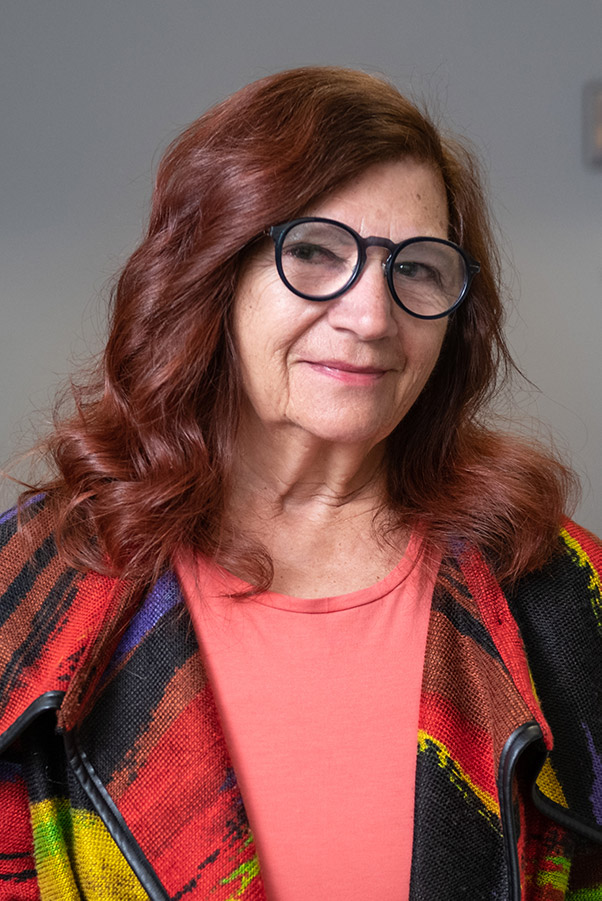
Title: Online Adaptation to nonstationary teammates
Abstract: Adaptation is one of the cornerstones of effective collaboration among heterogeneous team members. But adaptation is very challenging when it must be done online for as-yet unseen teammates, especially when those partners may change their strategies dynamically throughout the interaction. This nonstationary behavior is often observed in humans, but also in new agent partners where the dynamics of the environment may dictate strategy changes. Adapting in real time to nonstationary novel partners becomes particularly challenging in tasks with time pressure and complex strategic spaces. In this talk, I will discuss challenges and open problems and present our work on a strategy-conditioned cooperator framework that learns to represent, categorize, and adapt to a broad range of potential partner strategies in real time. Our approach dynamically infers and adjusts the partner strategy estimate during interaction. By seeking to minimize tracking error, our agent smoothly adapts to nonstationary strategies. We evaluate our method in a modified version of the Overcooked domain, a complex collaborative cooking environment that requires effective coordination among players with a diverse potential strategy space. Our results demonstrate that our proposed coordinator agent achieves better performance compared to existing baselines when paired with novel human and agent teammates.
Bio: Katia Sycara is the Edward Fredkin Research Professor of Robotics and Associate Director of Faculty at Carnegie Mellon University's Robotics Institute, with affiliated appointments in computer science, machine learning, human-computer interaction, and language technologies. Her research spans AI and machine learning, multi-agent and multi-robot systems, and human-robot teaming. She is a Fellow of IEEE and AAAI, and the recipient of the ACM/SIGART Agents Research Award and the INFORMS Lifetime Research Award.
Best Paper
Siyao Li and Matteo Leonetti
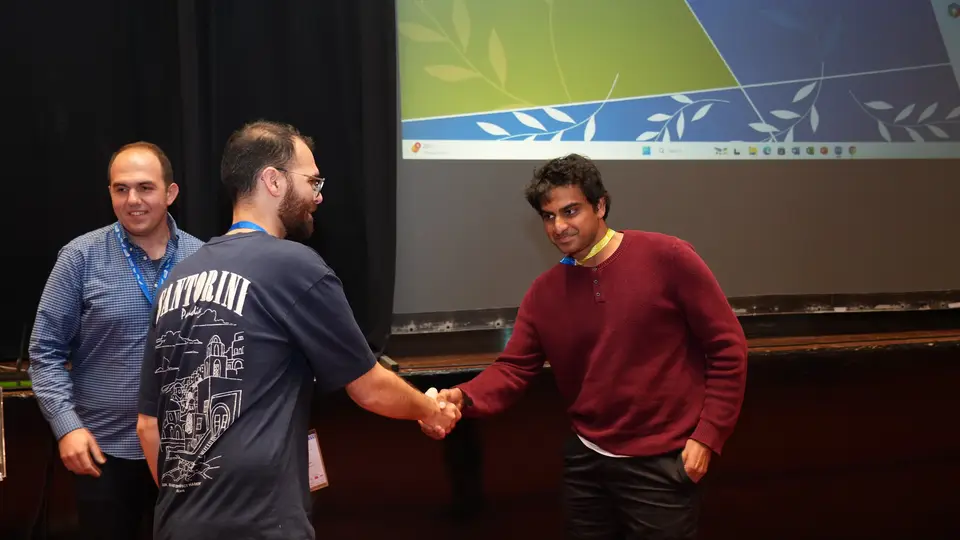
Runner Up
Prabhat Nagarajan, Brett Daley, Martha White, and Marlos C. Machado